
Implementing Odoo, a robust and all-inclusive business management software, can significantly improve your organisation.

Implementing Odoo, a robust and all-inclusive business management software, can significantly improve your organisation. To get the most out of it and ensure a smooth implementation, it is important to have a strategic plan. This blog shares some essential tips to help you with successful Odoo ERP implementation. From planning and customisation to training and support, this blog outlines some expert advice that will guide you through the process confidently. It is true that adopting a new software can be challenging, and hence, this post has tailored these tips to help you avoid common mistakes and achieve the best results. Whether you run a small business or a large enterprise, these tips will help you streamline operations, boost productivity, and drive growth. Whether you are new to Odoo or looking to improve your current setup, it is essential to learn the key strategies for a successful Odoo implementation. Implementing Odoo doesn’t have to be difficult. With the right approach and guidance, you can use this software to elevate your business. Read on to discover the secrets of a successful Odoo implementation.
Why is successful Odoo implementation crucial?
Implementing Odoo effectively can transform your business by making processes smoother, increasing efficiency, and providing useful insights. It helps align your operations with best practices, boosting productivity and aiding better decision-making. A well-executed implementation ensures you get the most out of your investment, while a poor one can cause disruptions, higher costs, and frustration among employees.
Things to consider before Odoo implementation
Implementing Odoo is a major task that requires careful planning to ensure it meets your business needs and goals. Here are the key factors to consider before starting:
Business Needs and Goals:
Understanding your business needs and setting clear goals are crucial for a successful implementation. Consider these questions:
Having clear goals will guide the implementation and help you measure its success.
Budget and Resources:
It is important to realistically assess your budget and available resources. Consider these aspects:
Stakeholder Engagement:
Engaging key stakeholders early in the process is crucial for gaining their support and ensuring the system meets their needs. Steps to take include:
Software Integration and Compatibility:
Evaluate how Odoo will fit into your current IT setup:
Customisation Needs:
While Odoo is very flexible, too much customisation can make it complex and hard to maintain. Consider these points:
Scalability and Flexibility:
Your business will grow and change, and your ERP system should support this growth:
Vendor and Partner Selection:
Choosing the right implementation partner is key to success:
Legal and Compliance Considerations:
Ensure your Odoo ERP implementation complies with all relevant laws and regulations:
Project Timeline and Timeframe:
Create a realistic timeline for your project that includes all implementation stages:
Steps in an Odoo ERP Implementation.
An Odoo ERP implementation usually involves these steps:
Overall, implementing Odoo ERP can help businesses streamline operations, improve efficiency, and gain better insights into their processes.
Types of Odoo ERP Implementation Strategies
Odoo, a popular open-source ERP software, can be implemented using different strategies based on business needs and goals. Here are some common strategies:
Choosing the right strategy depends on your business’s unique needs, goals, and resources. It is important to work with an experienced Odoo ERP implementation partner to determine the best approach for your business.
Tips To Successfully Implement Odoo ERP
Implementing an ERP system like Odoo can be complex, but with the right approach, it can be transformative for your business. Here are some tips to ensure success:
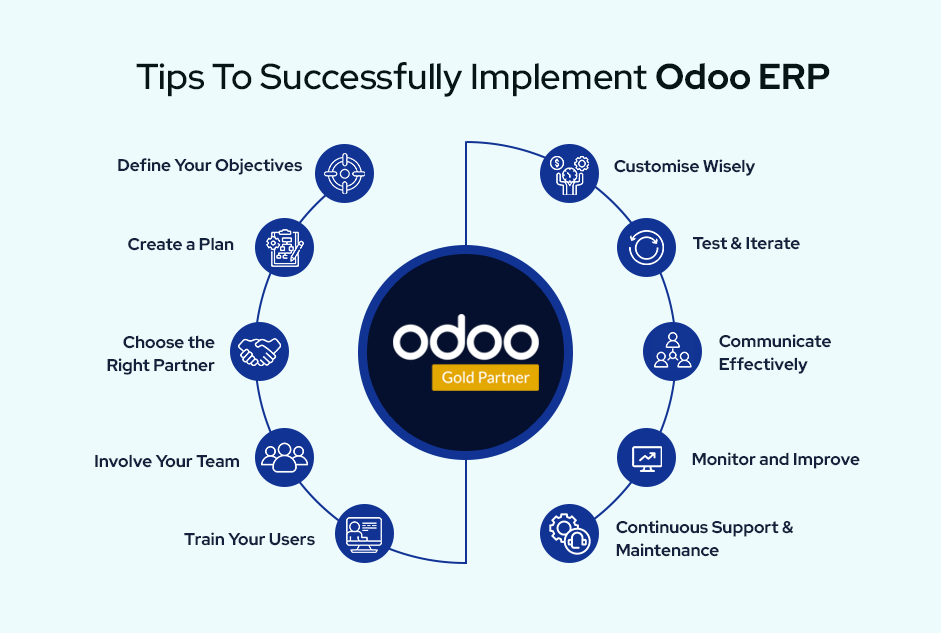
Define Your Objectives:
Clearly identify your business goals and align them with Odoo’s functionalities. For instance, if you aim to improve accounting processes, focus on Odoo’s invoicing, expense management, and financial reporting features. Prioritise your needs and plan which functionalities to implement first.
Create a Plan:
Develop a detailed plan outlining the project’s scope, timeline, milestones, and resources, including budget and team roles. Identify potential risks and mitigation strategies, and establish communication and reporting procedures. A comprehensive plan ensures everyone understands the project’s objectives and requirements.
Choose the Right Partner:
Select an experienced Odoo implementation partner who understands your business and industry. Look for a partner with a proven track record of successful Odoo implementations for similar businesses. Ensure they offer ongoing support, training, and maintenance services.
Involve Your Team:
It is crucial to include your team in the implementation process for success. They understand your business well and can offer valuable insights on how Odoo can help. Involve them from the start, provide training and support, and encourage their feedback.
Train Your Users:
Effective training ensures your team can use Odoo well. Develop a thorough training program covering both initial and ongoing support. Tailor the training to each team member’s roles and needs, and provide access to resources like manuals, videos, and forums.
Customise Wisely:
While Odoo is customisable, it is best not to overdo it. Too much customisation can complicate the system, increase costs and time, and make future upgrades tricky. Identify necessary customisations and keep them simple. Use Odoo’s built-in tools rather than creating custom code when possible.
Test & Iterate:
Testing and making improvements are crucial for any software rollout. Test the system thoroughly at each stage to catch and fix problems quickly. Test how well it works, how fast it is, and how secure it is. Get your team involved in testing, and make changes based on what you find.
Communicate Effectively:
Good communication keeps everyone in the loop and engaged. Make a plan to keep everyone updated with regular progress reports and ways to give feedback. Let everyone know how the project is going, what milestones have been reached, and if there are any problems. Encourage your team to share their thoughts, and address any concerns they have.
Monitor and Improve:
Keep an eye on how the system works after it is set up to find ways to make it better. Ask your team for feedback regularly and make changes to the system to fit your business better.
Continuous Support & Maintenance:
Keep helping and teaching your team to use the system well. Build a place where they can find answers and give them access to training tools like manuals, videos, and online forums.
Hence, a successful Odoo ERP implementation needs careful planning, good communication, and the right support. Follow these tips to make sure your implementation goes smoothly and brings lasting benefits to your business.
Also read about
“What are the Different Steps for Successful Odoo ERP Implementation”
Reasons Why Many Time Odoo Implementation Fails.
Odoo ERP implementation can fail if there’s not enough planning, users aren’t trained well, data isn’t good enough, people don’t want to change, and leaders don’t support it. But if you plan properly, train users well, make sure data is good, help people accept change, and get leaders on board, you can make it work.
To make sure your Odoo ERP implementation goes smoothly, plan well, train users properly, make sure data is good, help people accept change, and get leaders on board. Following these steps can lower the chance of problems and make your Odoo ERP work well for your business.
These steps can help you avoid problems with your ERP implementation. Odoo ERP is a robust and comprehensive solution for all business activities because it can be customised to fit your needs. You can get end-to-end Odoo solutions from Envertis, a certified Odoo gold partner in Australia. Talk to our Odoo experts today!

Get free consultation and let us know your project idea to turn it into an amazing digital product.

Se 506, 8 Help Street, Chatswood, NSW 2067
324 Queen Street, Brisbane, QLD 4000
171 Collins Street, Melbourne, VIC 3000