
The offcuts are piling up in the corner. The overordered steel has been sitting idle for three months. The stock that was
The offcuts are piling up in the corner.
The overordered steel has been sitting idle for three months.
The stock that was “definitely in bay four” — until it wasn’t.
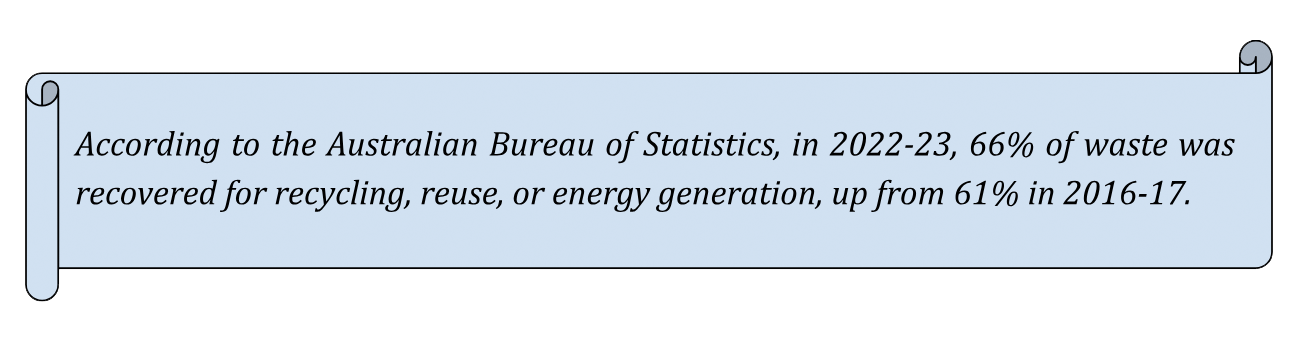
Every year, Australian manufacturers lose millions of dollars to preventable raw material waste. Whether it’s overordering, stock expiry, or production miscounts — the cumulative impact is devastating to margins.
For one Sydney-based manufacturer, the problem had reached a tipping point. Stock discrepancies were delaying production. Procurement was flying blind. And end-of-month stocktakes were eating hours the business simply couldn’t spare.
The solution wasn’t working harder — it was working smarter, with Odoo Inventory control.
What happened next delivered a 28% reduction in raw material waste within the first year. Here’s the full story.
A mid-sized metal fabrication manufacturer in Western Sydney supplies components to the construction and infrastructure sectors. With a team of 80 staff and five production lines running simultaneously, their inventory demands were complex — and growing.
But their inventory management hadn’t scaled with them. Stock was tracked across a patchwork of spreadsheets, WhatsApp messages between floor supervisors, and a legacy accounting system that hadn’t been updated in years.
The consequences were felt daily:
Sound familiar? For many Australian manufacturing SMEs, this isn’t a worst-case scenario — it’s Tuesday.
Spreadsheets were never designed for dynamic manufacturing environments. They don’t update in real time, can’t enforce process compliance, and spectacularly fail the moment two people edit the same file simultaneously.
For the Sydney-based manufacturer, the core failure was a lack of integration.
Their inventory data lived in silos — disconnected from purchasing, the shop-floor, and finance. No single system told them: what we have, where it is, and how fast we are consuming it.
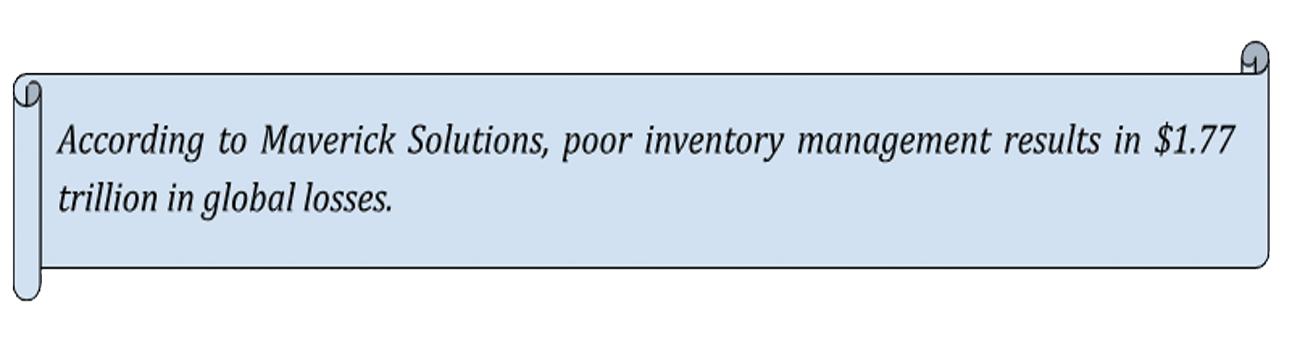
The results are predictable: over-purchasing to compensate for uncertainty, reactive (not proactive) procurement, and chronic material waste.
When the manufacturer’s leadership team in Sydney began evaluating options, they needed more than a standalone inventory app. They needed a fully integrated Odoo Inventory management system — one that connected purchasing, production, warehousing, and reporting in a single platform.
Odoo Inventory delivered exactly that. As part of the broader Odoo ERP suite, it offered:
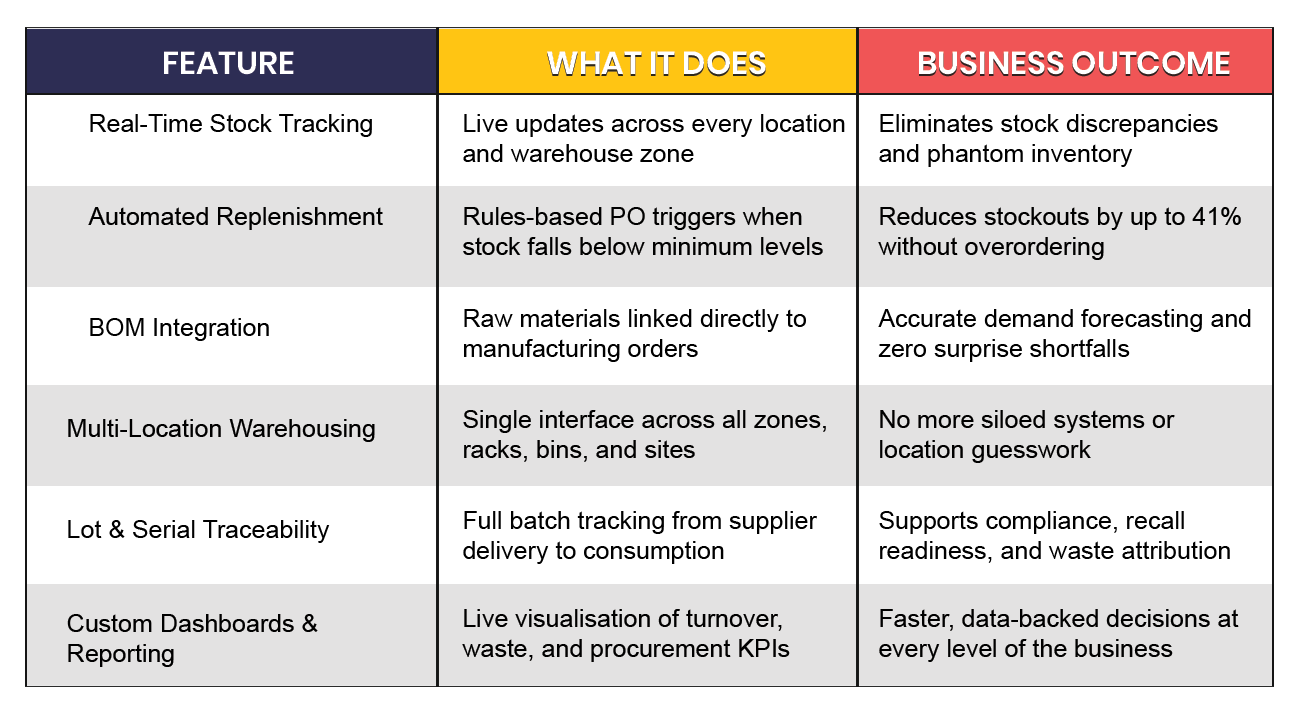
Unlike bolt-on inventory tools, Odoo Inventory operates within a unified ERP ecosystem — meaning every purchase order, manufacturing order, and delivery is automatically reflected in stock levels. No manual syncing. No data lag.

The metal fabrication manufacturer engaged Envertis — a specialist Odoo implementation partner in Australia — to manage the full deployment. The engagement followed a structured, low-disruption methodology:
The entire implementation was completed in 11 weeks — on time and within budget. Critically, production was never halted during the transition.
Within 12 months of go-live, the manufacturing company had transformed its inventory performance. The numbers told the story clearly:
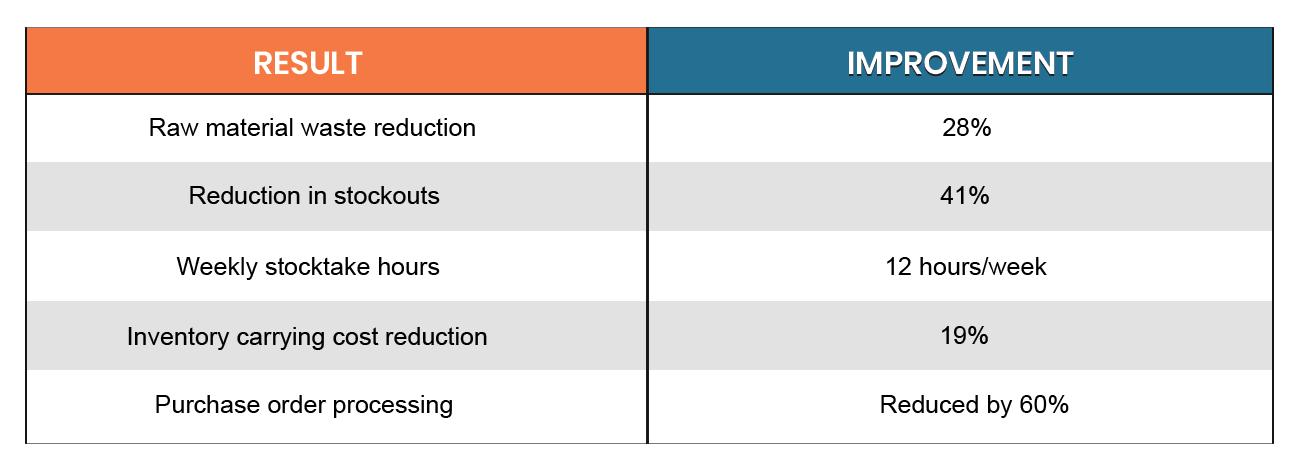
Beyond the numbers, the cultural shift was equally significant. Procurement stopped panic-buying. Production supervisors trusted the system. And the operations manager could finally answer the question every MD asks: “How much stock do we actually have?”
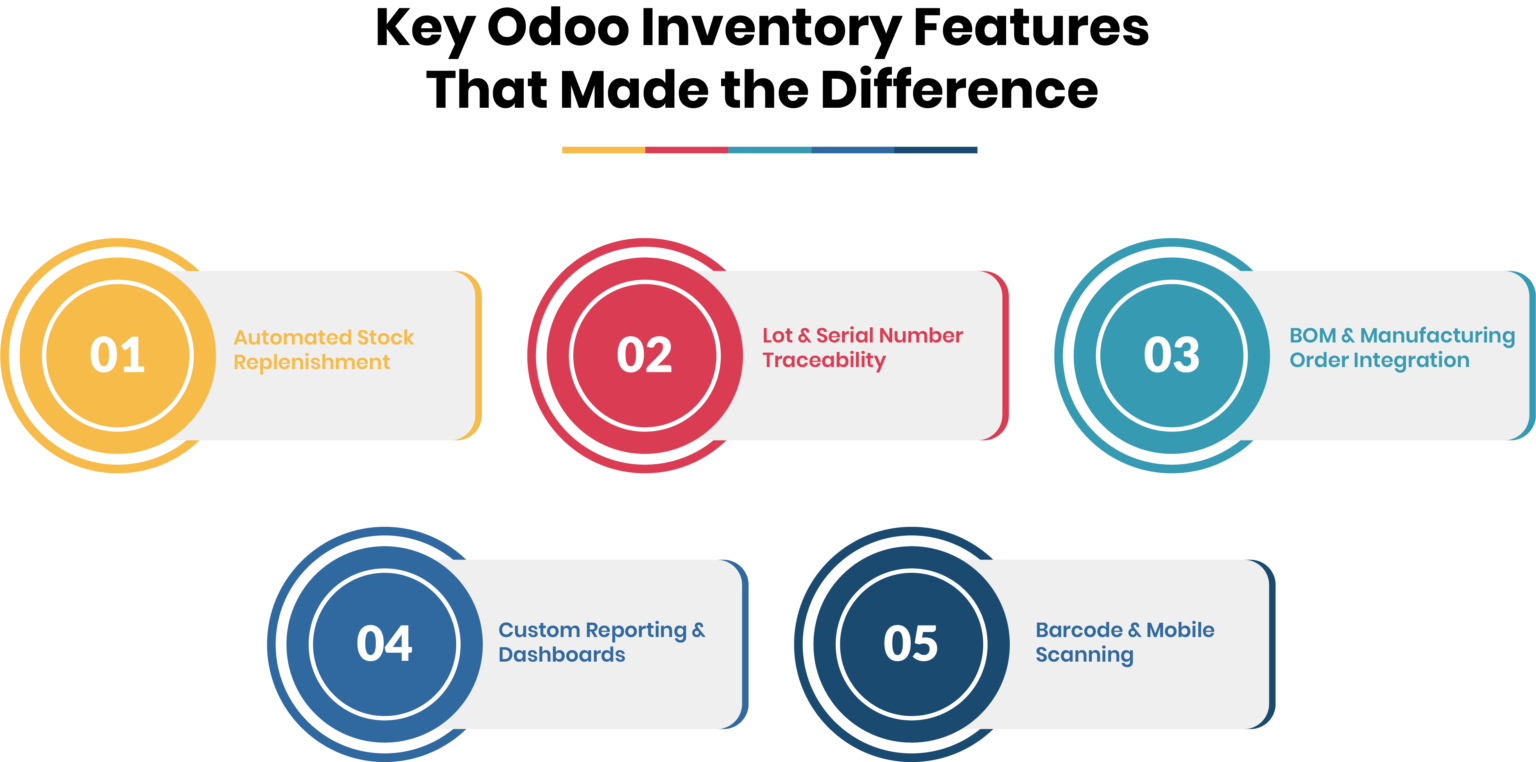
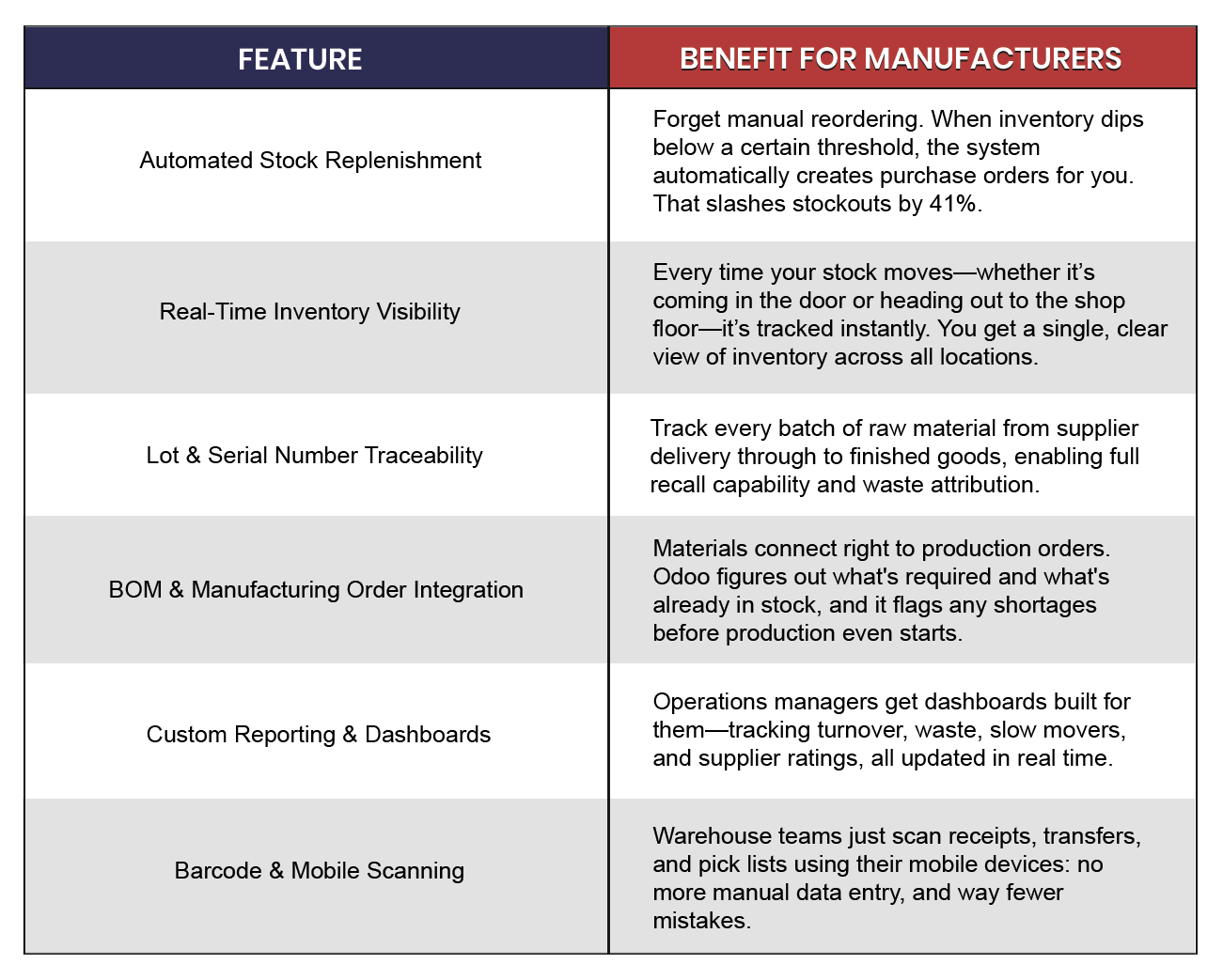
Not all inventory software is built for manufacturers. Here’s what sets Odoo Inventory management software apart for the manufacturing client:
You don’t need to be a large enterprise to benefit from Inventory Management Odoo. In fact, manufacturing SMEs with 20 to 150 staff consistently see the strongest ROI — precisely because they’re the ones still running on manual processes and disconnected systems, where the inefficiency gap is widest.
You might be ready if:
If three or more of the above resonate with you, a conversation with Envertis about Odoo Inventory Australia is well worth your time.
There’s no shortage of Odoo resellers. What separates Envertis is the depth of manufacturing knowledge combined with genuine local expertise in Odoo ERP in Sydney and across Australia.
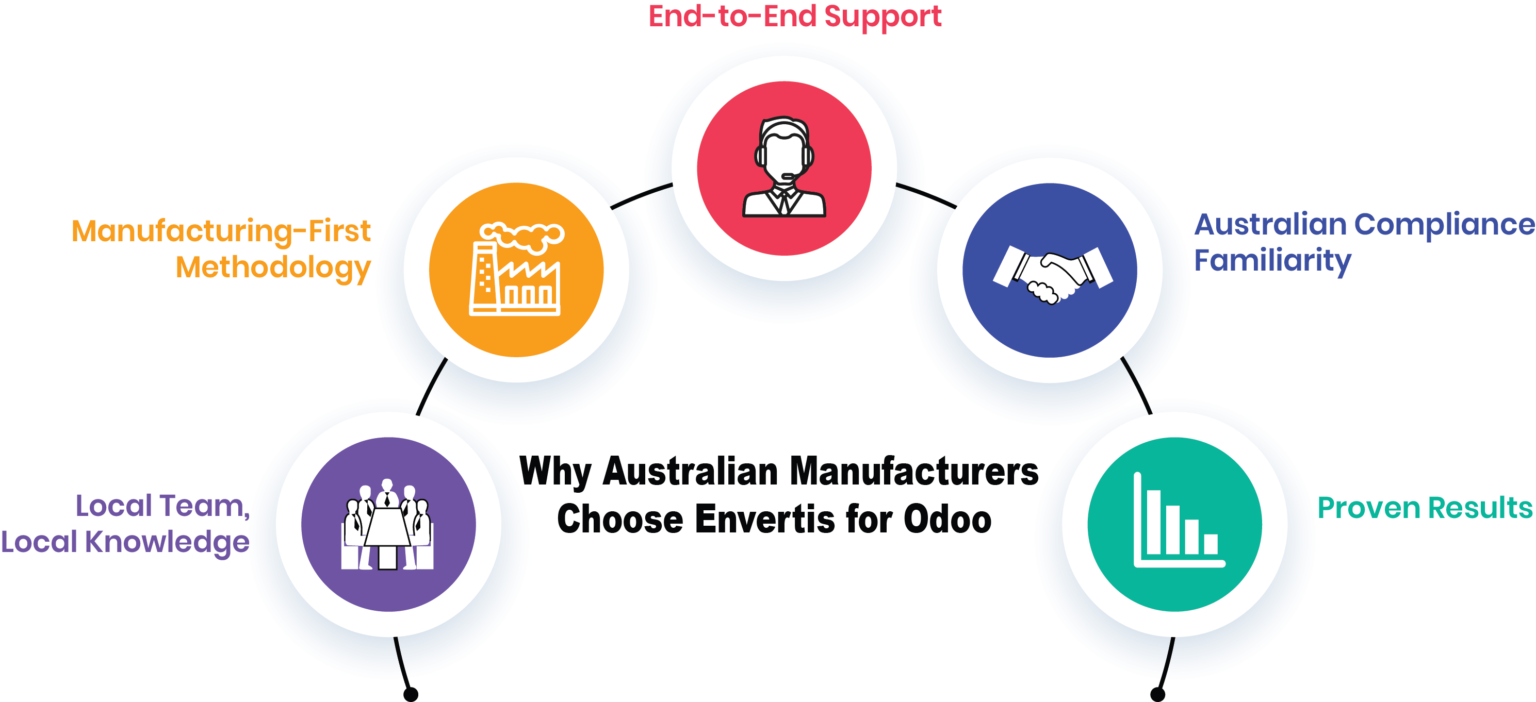
Inventory management Odoo implementations are not all created equal. The difference between a smooth go-live and a painful one almost always comes down to the implementation partner.

Odoo Inventory continues to prove itself as a top choice for Australian manufacturing SMEs. It meshes perfectly with manufacturing, purchasing, and finance modules, can scale as you grow, and doesn’t hit you with sky-high costs. Teaming up with a local partner like Envertis gives you those enterprise-level features—without the price tag to match.
With Odoo Inventory in Australia, everything connects seamlessly. When you confirm a manufacturing order, Odoo automatically checks if you have the necessary parts, reserves stock, and updates all your numbers as materials move on the shop floor. Your BOM links raw materials directly to finished goods, so you get solid demand forecasting and hands-off automated restocking.
Yes, Odoo can handle multiple warehouses and locations right out of the box. Whether you have just one site with a few storage zones or warehouses spread over several states, you get one dashboard that gives you a full view and real control everywhere.
Most Australian manufacturing SMEs complete an Odoo implementation in 8 to 14 weeks, depending on their data, the number of locations they have, and what needs to be integrated. Envertis works in phases to keep your operation running smoothly, so most clients are live with core inventory features in about 10–12 weeks.
Odoo goes straight to the usual causes of material waste. By tying demand forecasts to your BOMs, tracking real-time usage, and setting up automatic reorder rules, you buy only what you need, and nothing gets lost. Over-ordering just to be safe? Everything is designed to help you cut waste right at the source.
Returns vary, but the value drivers are consistent. Based on Envertis implementations, manufacturers typically recover their investment within 12 to 18 months through five areas: waste reduction, labour savings, lower carrying costs, fewer stockouts, and faster decisions.
Get free consultation and let us know your project idea to turn it into an amazing digital product.

Se 506, 8 Help Street, Chatswood, NSW 2067
324 Queen Street, Brisbane, QLD 4000
171 Collins Street, Melbourne, VIC 3000